Working at height is a routine requirement across construction, infrastructure, industrial maintenance, commercial buildings and large facilities. Whether the task involves installing services, maintaining structures, inspecting elevated areas or completing finishing work, having suitable access equipment can significantly affect how efficiently the work can be carried out.
An aerial work platform rental provides project teams with access equipment without requiring them to purchase and maintain a machine for long-term ownership. Depending on the work environment and access requirements, different types of aerial work platforms can be used, including scissor lifts, boom lifts and other elevated access platforms.
Choosing the right equipment requires more than simply selecting a machine that can reach a particular height. Working height, horizontal reach, platform capacity, ground conditions, site access, indoor or outdoor use, project duration and the nature of the work all need to be considered.
What Is an Aerial Work Platform?
An aerial work platform is a type of access equipment designed to raise personnel and, where permitted by the equipment specification, tools or materials to an elevated working position.
These machines are commonly used where workers need to access areas that cannot be conveniently reached from ground level or with conventional access methods.
Depending on the equipment type, an aerial work platform may provide:
- Vertical lifting
- Horizontal outreach
- Elevated positioning
- Access around structural obstacles
- Improved access to large or difficult-to-reach areas
- A designated working platform for specific elevated tasks
The correct equipment depends on the characteristics of the job and the manufacturer’s operating requirements.
Why Consider Aerial Work Platform Rental?
Purchasing access equipment may not be practical for every project. Construction contractors, infrastructure companies and maintenance teams may require an aerial lift for a specific project or limited period.
Aerial work platform rental can provide access to suitable equipment while avoiding the long-term ownership responsibilities associated with purchasing a machine.
Some common reasons companies consider rental include:
1. Project-Based Equipment Requirements
A contractor may need an aerial platform only during a particular phase of construction or installation. Renting allows the equipment requirement to be aligned with the project schedule.
2. Reduced Long-Term Ownership Commitment
Purchasing equipment involves more than the initial acquisition cost. Ownership can also involve storage, maintenance, inspections and other operational responsibilities.
Rental can be considered when the equipment is required periodically rather than continuously.
3. Access to Different Equipment Types
Different projects require different access configurations. A rental requirement may involve a scissor lift for vertical access on a suitable surface or a boom lift where horizontal outreach is necessary.
4. Support for Temporary Maintenance Work
Industrial plants, warehouses, commercial buildings and infrastructure facilities may require elevated access for maintenance or installation activities without needing to own an aerial platform permanently.
Types of Aerial Work Platforms
There is no single aerial work platform suitable for every application. The main equipment category should be selected according to the movement and access required at the work location.
Scissor Lifts
A scissor lift primarily provides vertical elevation. Its platform moves upward while remaining within the machine’s lifting structure.
Scissor lifts may be considered for tasks where workers need to operate above a particular area without requiring substantial horizontal outreach.
Typical applications can include:
- Building maintenance
- Electrical and service installation
- Warehouse work
- Interior construction
- Commercial facility maintenance
- Finishing and installation activities
The actual suitability depends on the equipment specification, ground conditions and work environment.
Boom Lifts
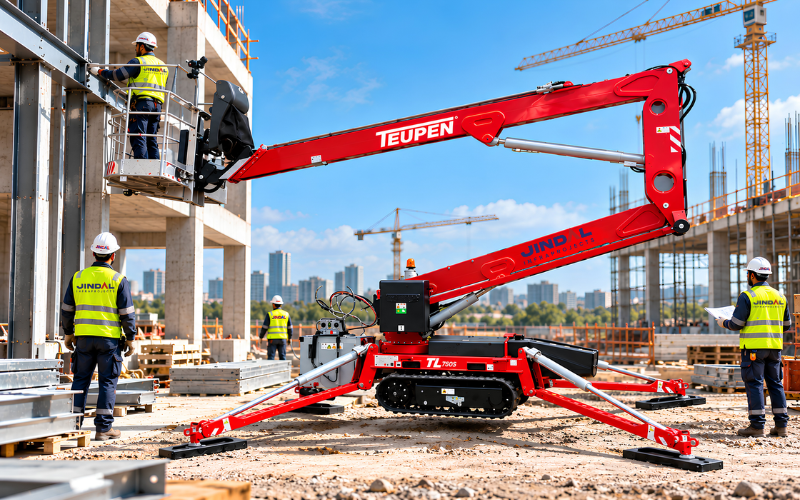
Boom lifts are designed to provide elevated access with an articulated or telescopic boom configuration, depending on the machine.
Their ability to position the platform away from the machine can be useful when the work area is not directly above the equipment’s base position.
Applications may include:
- Building construction
- Structural maintenance
- Industrial facilities
- Infrastructure projects
- Installation work
- External building maintenance
The required boom configuration should be determined according to the required working position, outreach and site conditions.
Vertical Access Platforms
Vertical access equipment can be suitable where the primary requirement is to move personnel vertically within a relatively restricted working area.
These platforms may be considered for certain indoor maintenance, installation and service applications where manoeuvrability and access are important.
Common Applications of Aerial Lift Rental
Aerial lift rental can support a wide range of construction and maintenance activities.
Construction Projects
Construction sites frequently require elevated access for installation, finishing, electrical work, mechanical services and building maintenance.
An appropriate aerial platform can provide access to elevated work areas while allowing project teams to select equipment based on the specific phase of work.
Industrial Maintenance
Industrial facilities may have elevated structures, services, equipment and installation points that require periodic access.
Aerial platforms can be considered for maintenance and inspection activities where the equipment configuration is appropriate for the site.
Warehouse and Facility Maintenance
Large warehouses and commercial facilities may require elevated access for lighting, electrical systems, service installations and maintenance.
For indoor environments, equipment selection should take into account available operating space, floor conditions, access routes and the characteristics of the facility.
Infrastructure Projects
Infrastructure projects can involve elevated work around structures, installations and construction areas.
The equipment required will depend on the project’s working height, terrain, access limitations, obstacles and task requirements.
How to Choose the Right Aerial Work Platform
Choosing an aerial platform should begin with the actual work requirement rather than simply selecting the largest available machine.
1. Determine the Required Working Height
First establish how high the workers need to reach for the task.
The required working height should be considered together with the equipment manufacturer’s specifications rather than estimated solely from the height of the building or structure.
2. Check Horizontal Reach
Height is only one part of access requirements.
If the work area is positioned away from the machine’s base location, horizontal outreach may become an important selection factor.
Boom-type equipment may be more appropriate for applications requiring outreach, while a scissor lift may be suitable when primarily vertical access is required.
3. Consider Platform Capacity
The platform must be suitable for the intended personnel, tools and permitted materials according to the equipment’s rated capacity.
The rental provider should be given accurate information about the expected working load before equipment selection.
4. Assess Ground Conditions
Ground conditions can influence equipment selection and positioning.
Consider:
- Surface condition
- Level or uneven ground
- Indoor or outdoor location
- Available working area
- Potential obstacles
- Access routes
- Ground-bearing considerations where applicable
The selected equipment should be appropriate for the actual operating environment.
5. Indoor or Outdoor Application
Indoor and outdoor projects can have substantially different requirements.
Indoor applications may involve:
- Restricted access
- Low-clearance areas
- Floor limitations
- Narrow passages
- Sensitive surfaces
Outdoor projects may involve terrain, weather exposure, site traffic and other environmental considerations.
6. Evaluate Obstacles Around the Work Area
Buildings, structural members, machinery, pipework, electrical installations and other obstacles can affect access.
For projects involving complex structures, the ability to position the platform around obstacles may be an important factor.
7. Consider Project Duration
Rental duration should correspond to the actual equipment requirement.
For short-term work, a short rental period may be appropriate. Longer construction or maintenance projects may require a different rental arrangement based on the project schedule.
8. Review Site Access and Transportation
Before arranging delivery, consider how the equipment will enter the site.
Important considerations can include:
- Gate dimensions
- Road access
- Internal pathways
- Working-area clearance
- Equipment mobilisation requirements
- Site restrictions
Early assessment can help reduce delays during mobilisation.
Aerial Work Platform Rental for High-Rise Maintenance
High-rise and large-building maintenance can involve complex access requirements. Exterior lighting, façade work, installation activities and other maintenance tasks may require equipment capable of reaching specific elevated positions.
For such applications, selection should consider both vertical working height and horizontal outreach.
Other factors include:
- Building geometry
- Ground conditions
- Available setup area
- Obstacles
- Access routes
- Work duration
- Environmental conditions
- Applicable site safety requirements
The rental provider should understand the actual site conditions before recommending equipment.
Aerial Work Platforms for Industrial Projects
Industrial sites often contain equipment, pipework, structural steel, platforms and other installations that can create access challenges.
For industrial maintenance, equipment selection may therefore depend on more than working height.
The rental requirement should consider:
- Equipment operating area
- Obstacles
- Required outreach
- Platform capacity
- Ground conditions
- Indoor or outdoor operation
- Site access
- Duration of maintenance activity
A site-specific assessment can help identify the appropriate access equipment for the application.
Rental vs Purchasing an Aerial Work Platform
The decision between renting and purchasing depends on equipment utilisation and project requirements.
| Factor | Rental | Purchase |
|---|---|---|
| Project-specific requirement | Suitable for temporary requirements | May involve long-term ownership |
| Equipment variety | Different equipment can be rented for different jobs | Equipment is limited to owned fleet |
| Maintenance responsibility | Depends on rental agreement | Owner manages maintenance |
| Storage | Generally less ownership-related storage responsibility | Requires suitable storage arrangements |
| Project duration | Useful for short or defined projects | More relevant for recurring utilisation |
| Capital commitment | Lower upfront ownership commitment | Requires equipment investment |
For contractors whose equipment needs vary from project to project, rental can provide greater flexibility in selecting equipment according to the immediate application.
Safety and Operating Considerations
Aerial work platforms should be selected and operated according to the manufacturer’s instructions, applicable regulations and project-specific safety requirements.
Before using an aerial platform, project teams should consider:
- Equipment condition and required inspections
- Operator competency and training requirements
- Ground and site conditions
- Platform capacity
- Working height and outreach
- Overhead and surrounding obstacles
- Weather and environmental conditions
- Site-specific risk assessment
- Emergency and rescue procedures where applicable
The appropriate controls depend on the equipment, workplace and local requirements. A rental provider should be informed about the actual operating environment so that suitable equipment can be considered.
Why Work With an Experienced Equipment Rental Company?
Selecting the machine is only one part of an aerial access rental requirement.
An experienced rental provider can help project teams evaluate equipment based on the intended application, site conditions and rental duration.
When evaluating a rental company, consider:
Equipment Availability
Confirm that the required equipment category is available for the planned project period.
Equipment Suitability
Share details about working height, outreach, platform load, terrain and operating environment before finalising the equipment.
Mobilisation Support
Discuss transportation and site-entry requirements in advance, especially for large infrastructure and industrial projects.
Maintenance and Equipment Condition
Clarify how equipment maintenance, inspection and breakdown support are handled during the rental period.
Project Support
For larger projects, communication between the contractor, equipment rental company and site team can help coordinate equipment delivery and utilisation.
Questions to Ask Before Renting an Aerial Work Platform
Before confirming an aerial work platform rental, project teams can ask:
- What type of aerial platform is suitable for the planned work?
- What working height is required?
- Is horizontal outreach necessary?
- What platform capacity is required?
- Can the equipment operate on the available ground conditions?
- Is the equipment suitable for indoor or outdoor use?
- What site-access requirements apply?
- How will transportation and mobilisation be handled?
- What maintenance or breakdown support is included?
- What operator and site-safety requirements need to be addressed?
Answering these questions before mobilisation can make equipment selection more structured and reduce the risk of choosing equipment that does not match the work environment.
Aerial Work Platform Rental for Construction and Maintenance Projects
Aerial access requirements vary significantly between projects. A machine suitable for indoor maintenance may not be suitable for an outdoor infrastructure site, while equipment designed for vertical access may not meet a project that requires horizontal outreach.
For this reason, aerial work platform rental should be approached as a site- and application-specific equipment decision.
Working height, outreach, platform capacity, ground conditions, access restrictions, obstacles, project duration and operating environment should all be evaluated before selecting equipment.
Jindal Projects provides construction equipment rental solutions for infrastructure and industrial project requirements. By discussing the project’s access requirements in advance, contractors can identify equipment suited to the planned application and project conditions.
Conclusion
Choosing the right aerial access equipment requires an understanding of the work rather than simply the required height. Aerial work platform rental can provide construction contractors, infrastructure companies and maintenance teams with flexible access to equipment suited to specific project requirements.
Before renting, evaluate working height, outreach, platform capacity, ground conditions, access restrictions, operating environment, project duration and site-specific safety requirements. Working with an experienced equipment rental provider can also help align equipment selection and mobilisation with the project schedule.
For construction, infrastructure and industrial applications, Jindal Projects can be considered for equipment rental requirements where suitable access and construction equipment is needed for project execution.
